
Hello, divers! Today, we’re going to delve into an important topic that often gets overlooked – sizing and adjusting your diving harness and backplate. It’s not uncommon to see divers with improperly adjusted harnesses on their backplates, which can lead to a variety of issues. So, let’s dive in and learn how to get the perfect fit!
The Importance of Proper Adjustment of your Dive Harness and Backplate
An improperly adjusted harness can cause issues with trim, making you either positively or negatively trimmed out. It can also lead to difficulties in reaching your valves, accessing d-rings, and can put all of the weight on your shoulders instead of your hips and waist when carrying your tank, rebreather, or doubles outside of the water. Below we have a video from our friends at SubGravity, but we also have a typed out, step-by-step guide as well.
Adjusting Your Harness: A Step-by-Step Guide (or watch the video above ⬆️)
When adjusting your harness on your back plate, it’s best to start from the top of the plate and move down to the bottom. Here’s a step-by-step guide to help you:
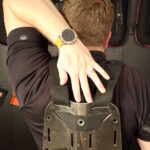
- Adjust the Height of the Plate: The first thing you need to do is adjust the height of the plate. It should be high enough that you can reach the top of the plate with either hand. This ensures that your tank valves are accessible and that the plate is at the correct position and height on your back, keeping your tank, double tanks, or rebreather in place and you in trim.
- Even Out the Shoulder Straps: Next, move down the shoulder straps, making sure that they are even so that the plate stays square on your back. An easy way to do this is to stand on the crotch strap and lift up on the shoulder straps, pinching them. This way, you can see if one is a different height than the other and adjust accordingly.
- Position the Chest D Rings: The correct placement of your chest D rings can be found by sticking your arms straight out with your thumbs pointed forward and bringing those thumbs straight into the shoulder straps. Wherever your thumb hits is where you want to place that D ring. This makes it a lot easier to clip off anything that you attach to that D ring, such as your primary regulator or your light.
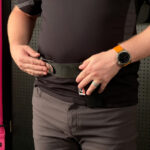
- Adjust the Waist Strap: After the shoulder straps, move to the waist strap. The buckle should be just to the right of your crotch strap and your line or cutting device should be just left of center, accessible with either hand. The waist strap should be tight enough that it can hold some of the cylinder weight on your waist above the hips when you’re walking outside of the water.
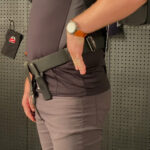
- Adjust the Hip D Ring(s): After adjusting the waist strap, position the left hip d ring (and the right hip d ring, if using one). Traditionally, this ring was positioned directly in line with the centerline of the hip. For cave diving, or other delicate environments, some divers choose to move the ring slight back to avoid having items (like the SPG) hanging down below the diver.
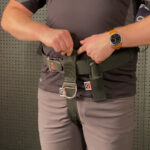
- Finalize with the Crotch Strap: The last thing to adjust is the crotch strap. It should be tight enough that the back plate does not rise up but not so tight that it pulls the waist strap down. One way to get the correct height is to pull up on it and the top of the straps should reach your navel.


Choosing the Right Back Plate Size
Most backplates only come in 1 size – SubGravity backplates come in two different sizes, standard and small. The smaller plate is both shorter and narrower. If you find that a standard back plate puts the waist strap down on your hips instead of on your waist or the shoulder straps are falling off your shoulders, you might consider trying a smaller plate.
Conclusion
Don’t settle for a poorly fitted backplate and harness. Make sure you adjust yours while wearing the exposure protection you plan on wearing underwater. Start from the top and work your way down. Remember, the key to a successful dive is not just about having the right equipment, but also making sure that it fits you perfectly. Happy diving!