
SDI Divemaster
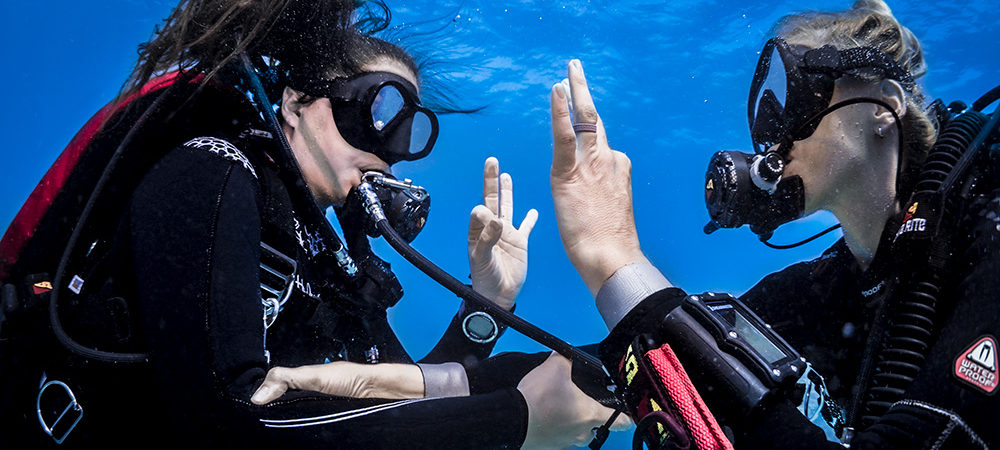
The SDI Divemaster Course is the first professional level certification. During the course you will learn how to work with divers, lead certified divers, and act as a dive guide showing divers underwater dive sites and the marine life that inhabits those dives sites. You will increase your knowledge about physics and physiology as well as increase your proficiency with your scuba and snorkeling skills.
What you can expect to learn
The SDI Divemaster Diver Course takes an in-depth look at all of the following and more:
- SDI standards and procedures
- History of SDI
- Code of ethics and professionalism of an SDI Divemaster
- Products and procedures
- How to place an order
- Yearly renewals
- Liability and insurance
- Risk management
- Waivers and releases
- Filling out an accident report
- Knowledge Development
- Equipment
- Physics and physiology of diving
- Medical problems related to diving
- Use of dive computers and tables
- Diving environment
- Dive planning and dive management control
- Problem solving
- Underwater and surface communications
- Diver assistance
- Avoiding out of air and emergency situations
- Recommended safe diving practices
- Boat diving procedures
- Shore/beach diving procedures
- Night diving procedures
- Accident management
- Emergency procedures
- Leadership development
- Planning group dives
- Divemaster check lists and logs
Some of the required skills you will have to demonstrate include:
- 800 metre swim with mask, snorkel, and fins non-stop without the use of arms in less than 17 minutes
- 400 metre swim on the surface, non-stop, any stroke, without the use of swimming aids, in less than 10 minutes; swim goggles permitted
- Scuba skills – minimum equipment: all equipment required for a SDI Dive Leader
- In water, transport another diver in full scuba equipment at a quick pace for 4 minutes
- Demonstrate a complete rescue scenario satisfactorily
- Perform underwater skills with and without a mask
- Swim on the surface, in full scuba equipment, using the snorkel, 100 metres
- Bring a diver, simulating unconsciousness, up from depth, not greater than 6 metres/20 feet; at the surface swim them 100 metres in less than 4 minutes
- Confined water skills:
- Preparation and planning
- Briefing and debriefing
- Group control
- Problem recognition and solving
- Diving equipment assembly and disassembly
- Equipment inspection
- Entries/exits
- Proper weighting and buoyancy control
- Snorkel and regulator clearing
- Regulator recovery
- Controlled descents and ascents
- Underwater swimming
- Mask clearing
- Buddy system techniques
- Weight system removal and replacement
- Out-of-air emergency alternatives
- Equipment care and maintenance
Course Equipment Requirements
Course Prerequisites
- Minimum age 18
- Certified SDI Advanced Adventure Diver or equivalent; advanced certification must include verifiable experience in deep, navigation, night, and limited visibility specialties
- DA requires a rec or tech pass in GUE Fundies
- Certified SDI Rescue Diver or equivalent
- Provide proof of current CPR, first aid and oxygen provider
- Provided proof of at least 40 logged dives
Note: FRTI Adult, Child, & Infant Emergency Care & Oxygen Provider programs may be combined with the SDI Divemaster program.
Over the last 20 years of teaching Dive Master programs, we have noticed lack of consistency in diving skills to the standard that DA has always required of our dive pros. Most often, these divers were lacking in the fundamental diving skills, such as:
- Equipment configuration and use (we teach all our SDI Open Water Students in a backplate and wing)
- Trim and buoyancy
- Propulsion techniques including backwards kick
- Valve management
- Gas sharing
- SMB deployment
The Dive Master program should be about learning how to work with divers, lead certified divers, and act as a dive guide, there is simply no time in the Dive Master program to spend on how to dive properly and efficiently yourself. Through dozens of Dive Master programs, we came to the conclusion that we needed to require more of the students coming into the professional level training so that we could spend the allotted time focusing on what professional level training should be about.
The GUE Fundies training has explicitly defined and objectively measurable standards. Requiring that our students enter any professional level course with a GUE Fundies rec or tech pass, was the most effective way to ensure that all students are diving and operating at a minimum level of proficiency and competency before beginning their professional training.
How much is the course?
$1300Take the Next Step


Want to know more?
Ask more questions or schedule any of these courses Email Us.